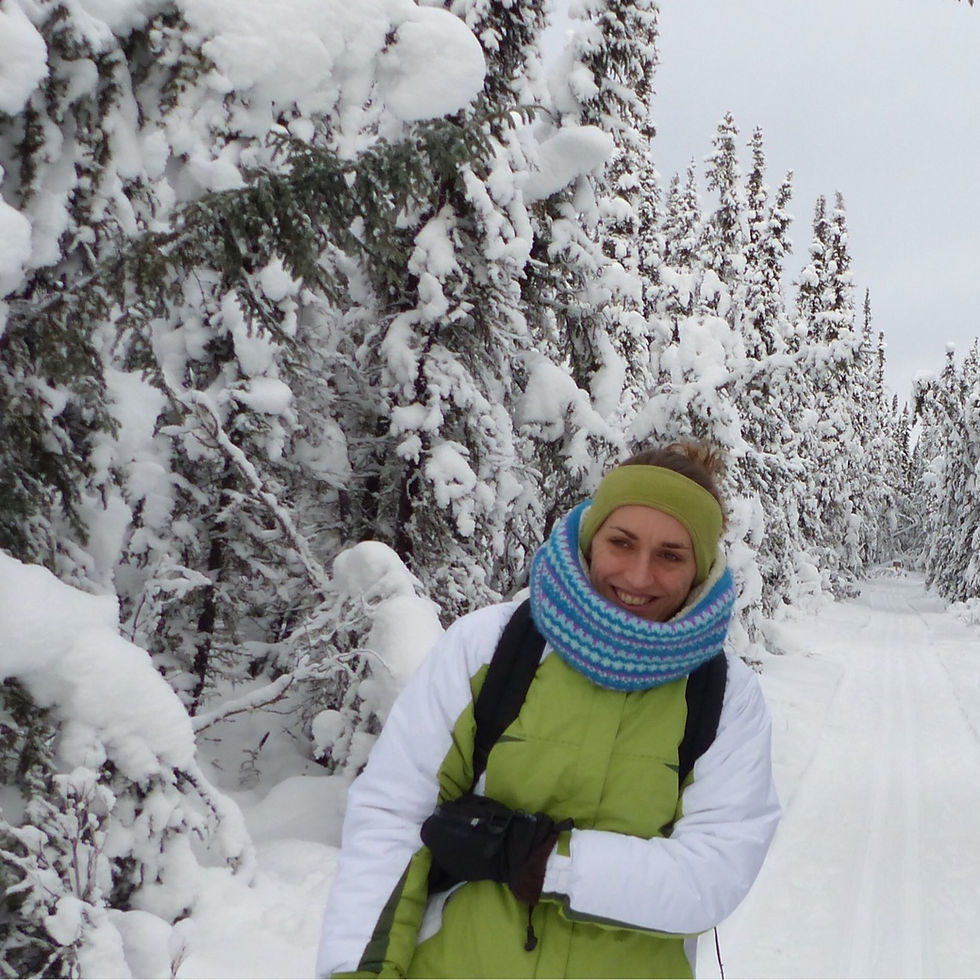


Teaching has been part of my professional life for many years. At first, it was also a wonderful opportunity to travel, discover new countries and experience different cultures. I had the chance to work abroad in French International Schools in Honduras, Guatemala, Nicaragua, Mexico and the United States, including Michigan and Alaska. Over time, teaching French became much more than a profession: it became a real part of who I am.
I’m also a certified DELF and DALF examiner, and I regularly prepare students for exams such as the TEF, TCF and AP French Language and Culture Exam.
I speak English and Spanish fluently, which can sometimes be reassuring if you need a little help along the way.
A Lifelong Commitment to Learning and Education

Before deciding what you need to work on, I want to hear you speak first. That’s exactly what our first Fluency Check is for: getting to know you, listening to your French and starting to identify what you need.
We’ll talk about your experience with French, the situations in which you use it, what feels easy, what frustrates you and what you’d like to be able to do more naturally.
From there, I’ll create a clear, personalised progression plan that targets your recurring difficulties and evolves based on my observations and feedback.
You’re going to speak. A lot.
I won’t interrupt you every time you make a mistake. I want you to develop your ability to express an idea, react, explain, tell a story and keep a conversation going.
As you speak, you become aware of the gap between what you want to say and what you can actually express in French. That gap shows us exactly what you still need to work on.
We’ll focus on the mistakes and difficulties that keep coming back through reformulation, brief explanations when needed and targeted practice.
But understanding a correction isn’t enough. You need to be able to use the correct form naturally when you need it.
So we’ll keep bringing it back into our conversations, in new contexts and from one session to the next, until you no longer have to think about it.
Little by little, you’ll spend less time translating, searching for words or thinking about every grammatical choice, and more time simply communicating.
The French you know gradually becomes the French you can use spontaneously and confidently.
If you’re a more advanced learner…
The goal will be to help you become more precise, spontaneous and nuanced, while expanding the French you can actually use.
Online, I’ll adapt the content to your interests and needs. Before some sessions, you’ll have an article to read, a podcast to listen to or a video to watch, which will provide the starting point for a guided conversation. I’ll also encourage you to reuse vocabulary, expressions and structures we’ve worked on previously, in different contexts, so that they gradually become part of the French you can use spontaneously.
During an immersion, this same process continues naturally throughout the day: discussing an article over breakfast, comparing life in France with life in your own country, talking to people we meet, or discussing history, art, food and local traditions as we explore.
You’ll develop your ability to express nuance, defend a point of view, tell stories and share experiences with greater precision, react spontaneously, and better understand humour, cultural references and everyday expressions.
If you’re a beginner…
You don’t need to wait until you “know enough French” to start communicating. We’ll use the people, places and situations around us to make French understandable and create plenty of opportunities for you to respond, interact and gradually find your own words.
I’ll adapt the way I speak and use context, gestures, images and reformulation without constantly relying on translation.
At this stage of your learning, regular and substantial exposure to French is essential. Outside our sessions, I’ll encourage you to listen to plenty of French that is adapted to your level: what is known as comprehensible input. The goal isn’t to understand everything or memorise every word, but to gradually train your ear to recognise the sounds, rhythm and patterns of French.
The more French you hear and can understand through context, the more familiar the language will become. Words and structures you’ve encountered again and again will gradually start to come to you naturally when you need them to communicate.
A Little More About Me
If we decide to work together, we’re going to spend quite a bit of time together, and I’ll genuinely enjoy getting to know you.
So perhaps you’re a little curious to know more about me too before we start!
When I’m not teaching, I love being outdoors: walking and spending time in nature. What I especially enjoy is that every season brings its own little treasures: apples and chestnuts in autumn for homemade compotes and treats, the magic of snow in winter, flowers and ferns that I dry for my greeting cards, and wild strawberries and blackberries for summer pies. I love noticing these small changes throughout the year and making the most of whatever nature has to offer. These days, a lot of my free time is also taken up by family life and basketball practices and matches. I recently joined a women’s basketball team myself, which was completely new for me and has turned out to be a lot of fun.
What about you? I’m genuinely curious to learn more about your life, your travels, your projects, your work, your family and the things that matter to you, because all of that will shape your immersion and the way I help you improve your French. For me, teaching is really about connecting with you, understanding how you think and finding the explanations and activities that work best for you.